
MOTS-c
$64.99
10 MG
In stock
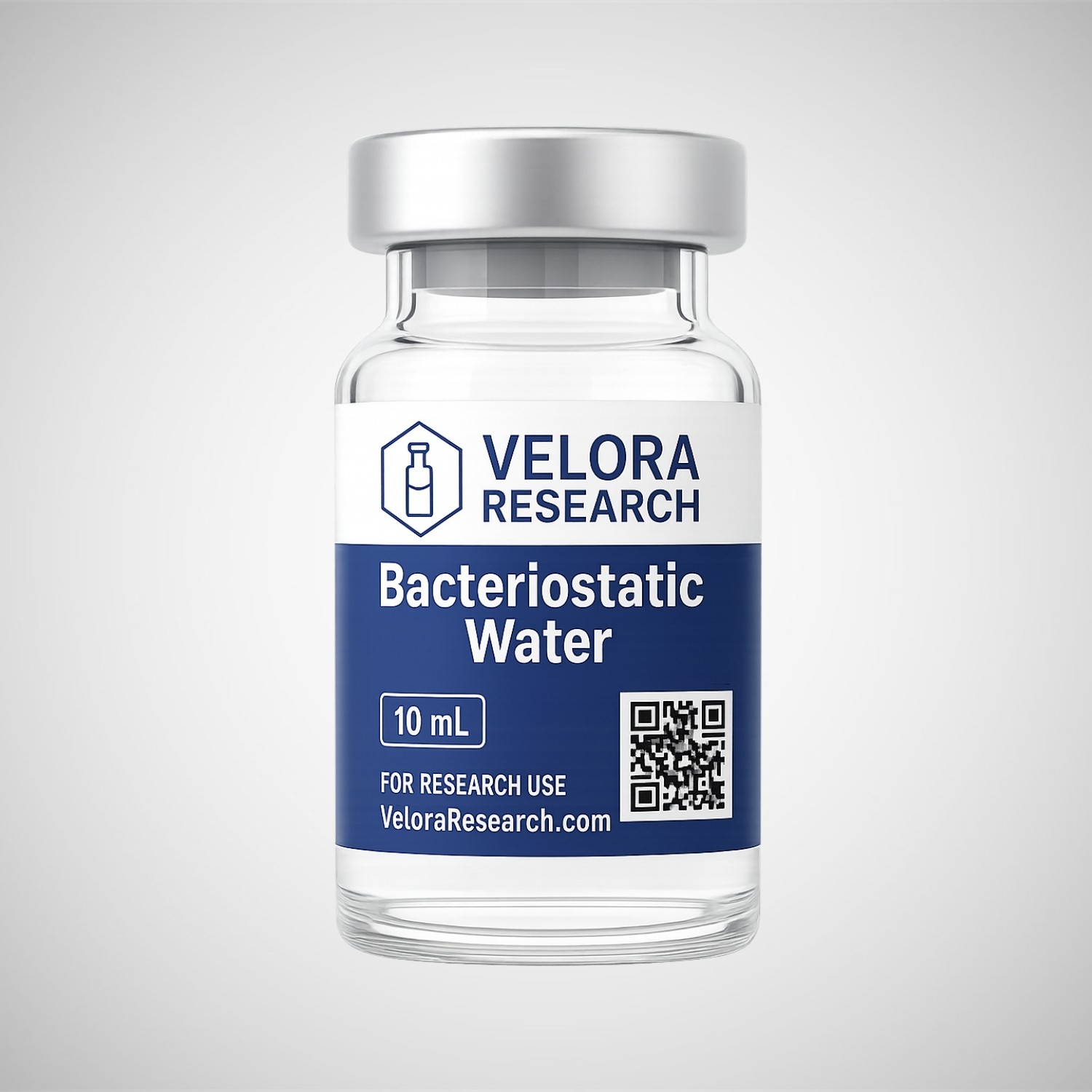
Buy bacteriostatic water for peptides at Velora Research. Sterile USP-grade water preserved with 0.9% benzyl alcohol, the standard diluent for reconstituting lyophilized research peptides. Available in 3ml and 10ml vials with multi-dose stoppers for repeated withdrawals. Fast US shipping. Free over $200. Strictly for laboratory research use, not for human or veterinary injection or ingestion.
Specifications
Bacteriostatic water for peptides is sterile USP-grade water preserved with 0.9% benzyl alcohol. It is the standard diluent that researchers use to reconstitute lyophilized peptides before in vitro and preclinical investigation. The benzyl alcohol preservative inhibits microbial growth in the vial after each needle penetration, which is what makes the same vial usable across multiple research reconstitutions over time.
Velora Research supplies bacteriostatic water in 3ml and 10ml sterile sealed vials, sized to match the volumes typical research-peptide protocols call for. Every vial ships with a multi-dose stopper that supports repeated withdrawals within the labeled stability window. The product is supplied solely for laboratory research-peptide reconstitution and is not for human or veterinary use.
Bacteriostatic water is sterile water (the same USP-grade Sterile Water for Injection used in pharmaceutical reconstitution) with the addition of benzyl alcohol as a bacteriostatic preservative at a concentration of 0.9% (9 mg per mL). The benzyl alcohol inhibits bacterial growth without sterilizing the solution outright, which lets researchers withdraw from the same vial multiple times across the labeled stability period rather than discarding the unused portion after a single use.
Bacteriostatic water is the most commonly used diluent for lyophilized research peptides because:
Researchers selecting a diluent for peptide reconstitution often compare three options. Summary of how the three differ at the formulation level:
| Attribute | Bacteriostatic water (BAC water) | Sterile water for injection | 0.9% sodium chloride (saline) |
| Preservative | 0.9% benzyl alcohol | None | None |
| Sodium content | None | None | Yes (0.9%) |
| pH range | 4.5 to 7.0 | 5.0 to 7.0 | 4.5 to 7.0 |
| Multi-dose use | Yes (preservative inhibits microbial growth) | Single use only | Single use only |
| Common research use | Standard peptide reconstitution across most protocols | Single-use reconstitution; saline-sensitive peptides | Saline-stable peptides; certain assays requiring isotonic vehicle |
| Why most peptide protocols use it | Multi-dose convenience plus pH compatibility | Best for single-experiment use | Required only when saline is part of the protocol |
For most lyophilized research peptides, bacteriostatic water is the diluent of choice. Sterile water for injection is appropriate when a single-use reconstitution is required or when benzyl alcohol could interfere with the assay. Normal saline is used only when the research protocol specifies an isotonic vehicle.
| Attribute | Specification |
| Product | Bacteriostatic water for peptides (BAC water) |
| Composition | Sterile USP-grade water with 0.9% benzyl alcohol preservative |
| Benzyl alcohol concentration | 9 mg per mL (0.9%) |
| pH range | 4.5 to 7.0 |
| Form | Sterile aqueous solution (clear, colorless liquid) |
| Available vial sizes | 3 mL and 10 mL |
| Vial closure | Sealed rubber stopper supporting multi-dose needle penetration |
| Shelf life (unopened) | Up to 24 months under proper storage conditions |
| Stability after first puncture | Up to 28 days when stored properly between withdrawals |
| Storage temperature | 15 to 25°C (room temperature), protected from light. Do not freeze. |
| Intended use | Research-peptide reconstitution in laboratory settings only |
| Vial size | Price (USD) | Best for |
| 3 mL | $6.99 | Smaller pilot protocols, single-peptide research designs, lower per-vial concentration targets |
| 10 mL | $9.99 | Multi-vial reconstitution rounds, larger peptide vials (70mg blends, 100mg compounds), better per-mL value |
Free US shipping applies on orders over $200. Most peptide orders that include bacteriostatic water cross the free-shipping threshold automatically. International orders are accepted in accordance with applicable research regulations.
The procedure below is the standard reconstitution workflow used in research peptide laboratories. Follow your study protocol’s specific instructions if they differ. The general method:
Quick reference for the most common research-peptide vial sizes and the resulting stock concentration at different BAC water volumes:
| Peptide vial | BAC water added | Resulting concentration | Notes |
| 5 mg | 1 mL | 5 mg/mL | Most concentrated; for protocols requiring small dose volumes |
| 5 mg | 2 mL | 2.5 mg/mL | Balanced; common pilot ratio |
| 10 mg | 1 mL | 10 mg/mL | High concentration; precise small-volume dosing required |
| 10 mg | 2 mL | 5 mg/mL | Standard reconstitution for most 10mg peptide vials |
| 10 mg | 5 mL | 2 mg/mL | Lower concentration; easier to measure larger dose volumes |
| 70 mg blend (e.g., GLOW) | 5 mL | 14 mg/mL | Common ratio for high-mg proprietary blends |
| 100 mg (e.g., GHK-Cu) | 5 mL | 20 mg/mL | Standard ratio for 100mg copper peptide vials |
If your protocol uses a U-100 insulin syringe (100 units = 1 mL), 10 units equals 0.1 mL, 25 units equals 0.25 mL, and 50 units equals 0.5 mL. Multiply the syringe volume by the stock concentration to determine the mg dose drawn.
Bacteriostatic water for peptides is sterile USP-grade water preserved with 0.9% benzyl alcohol, used as the standard diluent to reconstitute lyophilized research peptides before in vitro or preclinical investigation. The benzyl alcohol preservative inhibits microbial growth and supports multi-dose use from a single vial across the labeled stability window.
Sterile water for injection is pure water with no preservative, intended for single-use reconstitution. Bacteriostatic water is the same sterile water with 0.9% benzyl alcohol added as a preservative, which inhibits bacterial growth and allows multiple withdrawals from the same vial. For most research peptide protocols, bacteriostatic water is preferred because it allows the same vial to support multiple reconstitution events.
The volume depends on the target stock concentration. Divide the peptide vial size by the target mg per mL concentration to determine the volume to add. For example, a 10mg peptide vial reconstituted with 2 mL of bacteriostatic water yields a 5 mg/mL stock solution. Refer to the reconstitution math table above for common ratios across peptide vial sizes.
Wipe both vial stoppers with alcohol. Draw the calculated volume of bacteriostatic water into a sterile syringe. Insert the needle into the peptide vial at a 45-degree angle and slowly release the water down the inside wall of the vial. Do not squirt directly onto the powder. Allow the peptide to dissolve, swirling gently if needed. Do not shake. Once clear, label the vial with the date and concentration, then refrigerate at 2 to 8°C. The full procedure is detailed in the ‘How to mix peptides with bacteriostatic water’ section above.
The 0.9% benzyl alcohol preservative supports up to 28 days of multi-dose use after the first needle puncture, when the vial is stored properly at room temperature between withdrawals. Discard any vial that appears cloudy, discolored, or contains visible particulate matter.
Bacteriostatic water is the standard diluent for most lyophilized research peptides. However, certain assay designs may call for sterile water (single-use) or normal saline (isotonic vehicle) instead. Consult the peer-reviewed literature for protocol-specific guidance, and verify that your peptide is compatible with the benzyl alcohol preservative before use.
Store unopened vials at 15 to 25°C (room temperature), protected from direct light. Do not freeze, which can damage the sealed vial. Unopened shelf life is up to 24 months. After first puncture, the preservative supports up to 28 days of multi-dose use.
Velora Research supplies bacteriostatic water in two sterile vial sizes: 3 mL ($6.99) and 10 mL ($9.99). The 3 mL vial is sized for smaller pilot protocols. The 10 mL vial is the more common choice for larger peptide vials and multi-vial reconstitution rounds.
No. Velora Research supplies bacteriostatic water strictly for laboratory research-peptide reconstitution by qualified institutions and research professionals. The product is not packaged or quality-controlled for personal, medical, cosmetic, or therapeutic use. Purchasers confirm research-use-only intent at checkout.
Velora Research accepts international orders for laboratory research use only. Buyers are responsible for ensuring compliance with all applicable local, state, and national regulations in their jurisdiction prior to purchasing.


